

Good pearl care is mostly about gentle, consistent habits: put pearl jewelry on after cosmetics and fragrance, remove it before water or strenuous activity, wipe it after wear, and store it away from harder jewelry. Pearls do not need complicated maintenance, but their surface is softer and more sensitive than many gemstones.
The safest routine also considers the whole piece. Thread, adhesive, plating, gemstones and metal settings may each have different care needs, so a method that is safe for a loose pearl may not be right for a finished necklace or earring.
Why pearl jewelry needs gentle care
Pearl is an organic gem material made by a mollusk. At about 2.5 on the Mohs hardness scale, it can be scratched or abraded more easily than quartz, sapphire and many common jewelry materials. Its surface can also be affected by acids, harsh chemicals and high heat.
That does not make pearls too fragile to wear. It simply means they benefit from softer contact, mild cleaning and protection from products that can dull or damage the surface.
Follow the “last on, first off” rule
Put pearl jewelry on after you have applied perfume, hairspray, lotion, sunscreen and makeup—and after those products have dried. Remove it before washing your face, showering or changing clothes.
This order reduces direct contact with cosmetics and helps prevent necklaces and earrings from catching on clothing. It is a small habit that protects both the pearl surface and the construction of the piece.
When should you remove pearl jewelry?
Take pearls off before activities that expose them to chemicals, repeated water, heat, impact or heavy perspiration:
- Showering, bathing and swimming
- Exercise, gardening and household cleaning
- Sleeping
- Applying beauty or hair products
- Using hand sanitiser near pearl rings or bracelets
- Cooking over strong heat or working around grease and acidic ingredients
Brief accidental contact is not always a disaster. The concern is repeated exposure and the effect on the entire piece—especially silk or textile thread, glue, plating and metal components. Our guide to pearls and water exposure explains the difference between careful cleaning and routine soaking.
Wipe pearls after each wear
After wearing pearl jewelry, gently wipe it with a clean, very soft cloth. This removes perspiration, skin oils and traces of cosmetics before they remain on the surface.
- Wash and dry your hands.
- Lay the piece on a clean, soft surface.
- Support the jewelry rather than pulling on thread or findings.
- Wipe each pearl lightly; do not polish with pressure.
- If the piece feels damp, let it dry flat before storing it.
A dry wipe is enough for routine care. Frequent washing is not necessary when the jewelry is not visibly soiled.
Clean only when needed
For occasional cleaning, a soft cloth lightly dampened with lukewarm water may be sufficient. If residue remains and the construction allows it, use a very small amount of mild soap diluted in lukewarm water. Wipe gently, then remove any soap with a separate damp cloth.
Do not soak a strung piece. Water and repeated handling can weaken or stretch some threads, and moisture can remain near drill holes. Glued settings and mixed-material designs may also require extra caution.
Lay the jewelry flat on a clean towel and allow it to dry completely before wearing or storing it. Do not use a hairdryer, radiator or direct sunlight to speed the process. For exact tools, steps and material-specific cautions, follow our guide to cleaning pearls safely at home.
What should never be used on pearls?
- Ultrasonic cleaners
- Steam cleaners
- Jewelry dips intended for metal or harder gemstones
- Vinegar, lemon juice or other acids
- Baking soda, toothpaste or abrasive powders
- Bleach, ammonia or strong detergents
- Stiff brushes, rough cloths or paper towels
- High heat or forced hot air
Even a “natural” household cleaner can be too acidic or abrasive for pearls. More friction does not create more lustre; it can wear the surface.
Store pearls separately
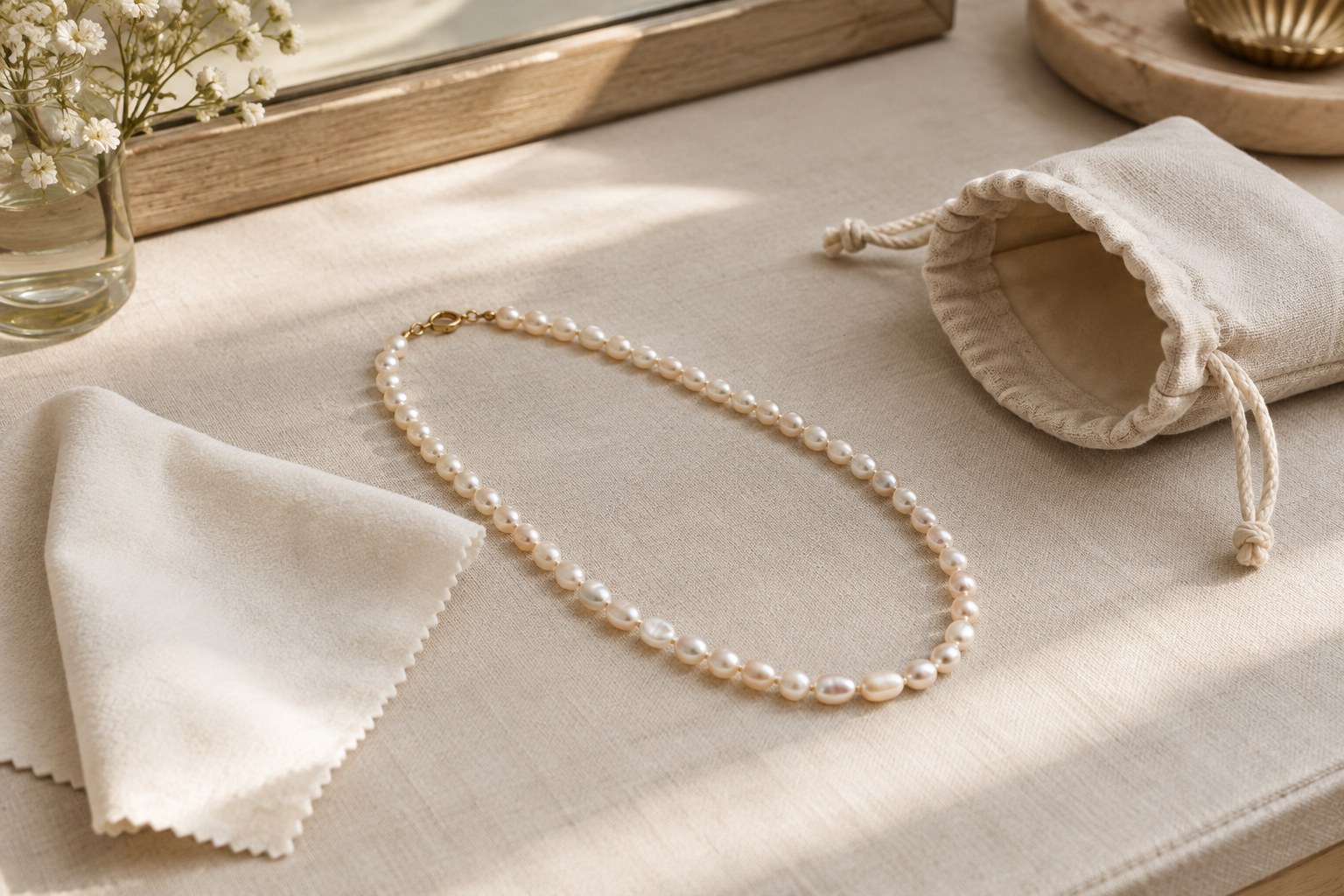
Diamonds, sapphires, metal edges and even other clasps can scratch pearl surfaces. Store pearl jewelry in its own soft pouch or in a separate, fabric-lined compartment.
- Lay necklaces and bracelets flat rather than hanging them for long periods.
- Fasten clasps so metal parts are less likely to rub against the pearls.
- Keep earrings separated from one another if posts or backs could make contact.
- Avoid piling pearl pieces together.
- Choose a clean place away from direct sunlight, high heat and rapid temperature changes.
After cleaning, make sure every part of the piece is completely dry before it goes into storage. For strands, earrings and travel cases, follow our guide to storing pearls properly.
Care for strung pearl necklaces and bracelets
Stringing material gradually experiences tension, moisture and friction. Before wearing a strand, look near the clasp and between pearls for changes:
- Fraying or fuzziness
- Stretched sections or new gaps
- Discoloured thread
- Loose knots
- A clasp that no longer closes securely
If you see any of these signs, stop wearing the strand and have it inspected by a jeweler or experienced pearl restringer. Restringing intervals depend on how often the piece is worn, its weight, the thread and the construction; a fixed annual schedule is not right for every piece.
Traditional knotting between pearls can help reduce rubbing and may limit pearl loss if the strand breaks, but construction styles vary. The appropriate method should suit the design and the size of the drill holes.
Care for pearl earrings, rings and glued settings
Stud earrings and some decorative settings may use adhesive. Avoid twisting or pulling the pearl itself when removing the jewelry. Hold the metal setting or finding where possible.
Pearl rings and bracelets receive more knocks and surface contact than earrings or pendants. They are best worn with a little more care and removed for chores, exercise or work that involves hard surfaces.
Check posts, prongs, wirework and glued joins periodically. If a pearl moves, a setting catches or adhesive becomes visible, set the piece aside for professional inspection rather than adding household glue.
How to travel with pearl jewelry
Place each piece in a soft pouch or a small compartment that prevents movement. Lay strands in a loose curve without sharp bends. Keep earrings from pressing into pearl surfaces, and do not pack heavy items on top.
Carry valuable or sentimental pearl jewelry with you rather than in checked luggage. After travel, inspect clasps and settings before wearing the piece.
A simple pearl care routine
- Before wear: finish perfume, cosmetics and hair products first.
- During wear: avoid water, chemicals, impact and heavy perspiration.
- After wear: wipe gently with a soft cloth.
- When soiled: clean with minimal moisture and mild materials.
- Before storage: dry completely and place separately in a soft compartment.
- Occasionally: inspect thread, knots, clasps, posts and settings.
Find more material-specific cleaning and storage advice in our Jewelry Care Guide.
Frequently asked questions
Can I wear pearl jewelry every day?
Yes, if the design suits regular wear and you follow gentle habits. Earrings and pendants usually receive less abrasion than rings and bracelets. Wipe pearls after wear and remove them for water, exercise and household tasks.
Does perfume damage pearls?
Direct or repeated contact can affect the pearl surface. Apply perfume before putting pearls on and allow it to dry first.
How often should I clean pearls?
Wipe them after each wear. Use a deeper gentle clean only when visible residue remains. Overcleaning and unnecessary soaking can create more risk than benefit.
Can pearls go in an ultrasonic cleaner?
No. Ultrasonic and steam cleaners are not appropriate for pearls and can also damage adhesive, thread or other components.
When should a pearl necklace be restrung?
Have it inspected when the thread looks stretched, fuzzy, stained or loose, or when knots and the clasp show wear. Frequency depends on use and construction rather than a single timetable.